
.svg)

RESOURCE ARTICLE
Why Products Fail to Reduce User Churn and How Better Onboarding Fixes It
Reducing user churn is rarely about retention tactics alone. Most products lose users not because the pricing is wrong or the features are insufficient, but because users never reach a point where the product feels clear, valuable, and trustworthy.
Churn begins early, often within the first few sessions. If onboarding fails to guide users toward confidence and meaningful outcomes, even the strongest products struggle to retain them.
This article explains why products fail to reduce user churn from a product design and onboarding perspective, and how better onboarding directly addresses the root causes of churn.
Understanding User Churn as a Product Signal
User churn is often treated as a business metric that appears on dashboards and board decks. In practice, it is a direct signal of how users experience the product.
When users stop using a product, they are rarely reacting to price or features in isolation. They are responding to friction in the experience itself. Confusion, hesitation, and uncertainty accumulate quietly as users try to navigate the product. Each moment of doubt increases the mental effort required to continue.
If using the product feels unclear, effort heavy, or mentally taxing, disengagement becomes the rational response. Users do not consciously decide to churn in most cases. They pause, delay returning, and eventually stop altogether. By the time churn shows up as a metric, the underlying product experience has already failed to support the user early and consistently.
How Early Experience Shapes Churn
During the first few interactions, users quietly assess whether the product fits into their workflow. They ask themselves whether the product aligns with how they already work, think, and make decisions, or whether it demands too much adjustment too soon. They ask themselves:
- Do I understand what this product helps me achieve?
- Do I feel confident using it without guidance every step?
- Am I making visible progress toward something useful?
If these questions remain unanswered, churn becomes likely regardless of long-term potential.
Why Products Fail to Reduce User Churn
Many products struggle to reduce user churn not because they lack value, but because users never experience that value clearly or quickly enough. The reasons behind churn are often rooted in product design decisions that create confusion, slow progress, or uncertainty during early use. Understanding these failure points is the first step toward fixing churn at its source.
Products Assume Too Much User Context
Most products are designed by teams with deep internal knowledge. New users do not share that context.
When onboarding assumes familiarity with terminology, workflows, or data structures, users hesitate. They delay setup, avoid key actions, and disengage quietly.
This assumption gap is one of the most common user churn causes and one of the hardest to detect.
Features Are Introduced Before Value Is Established
Many onboarding flows expose users to dashboards, menus, and features before explaining why they matter.
Empty states feel confusing. Actions feel disconnected from outcomes. Users struggle to understand how effort translates into value.
This misalignment is a major contributor to onboarding churn, especially in products with multiple use cases.
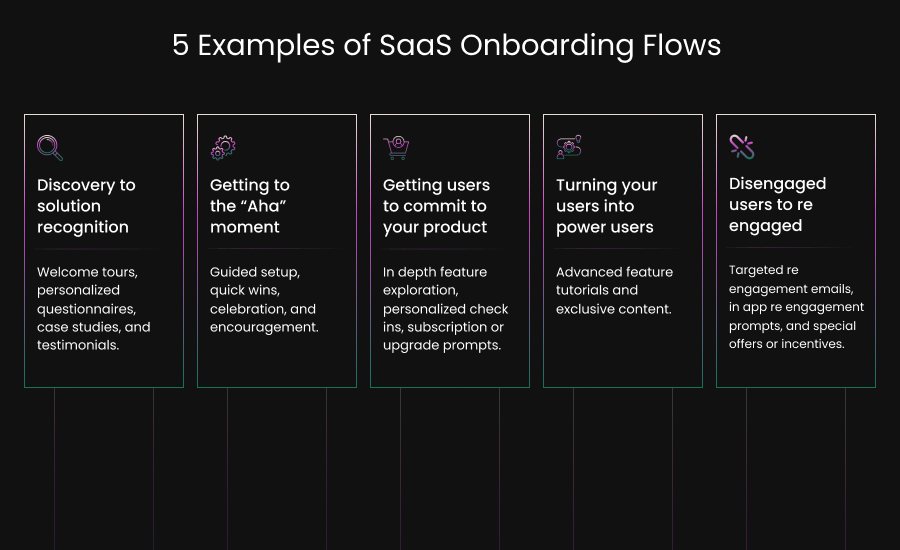
One Onboarding Flow Is Used for All Users
Users arrive with different goals, urgency levels, and experience. Some want quick wins. Others want safe exploration.
Static onboarding flows treat all users the same. This forces users to mentally filter information and find relevance on their own.
When onboarding does not adapt to user intent, it quietly increases churn.
Small Friction Accumulates Over Time
Not all friction is obvious.
Unclear labels, confusing buttons, too many choices, and lack of confirmation after actions all contribute to hesitation. Individually, these moments seem minor. Together, they erode confidence.
Because these issues rarely trigger support tickets, they often go unnoticed until churn appears later.
Progress and Direction Are Missing
Users need to feel movement.
When onboarding does not show progress, milestones, or next steps, users assume they are stuck or doing something incorrectly. Motivation drops, especially in complex products.
This lack of progress signaling is a frequent but overlooked churn driver.
Why Onboarding Is the Strongest Churn Reduction Strategy
Most churn reduction strategies focus on re-engagement after users have already disengaged. Emails, in app nudges, discounts, and success calls attempt to pull users back once usage has slowed or stopped. By that point, confidence in the product is already weakened and the effort required to return often feels too high.
Onboarding works much earlier in the lifecycle, when users are still forming habits and expectations. This is the stage where trust is built, usage patterns are established, and perceptions of value take shape. When onboarding is effective, it prevents disengagement before it begins, making churn far less likely to occur in the first place.
How Better Onboarding Fixes User Churn
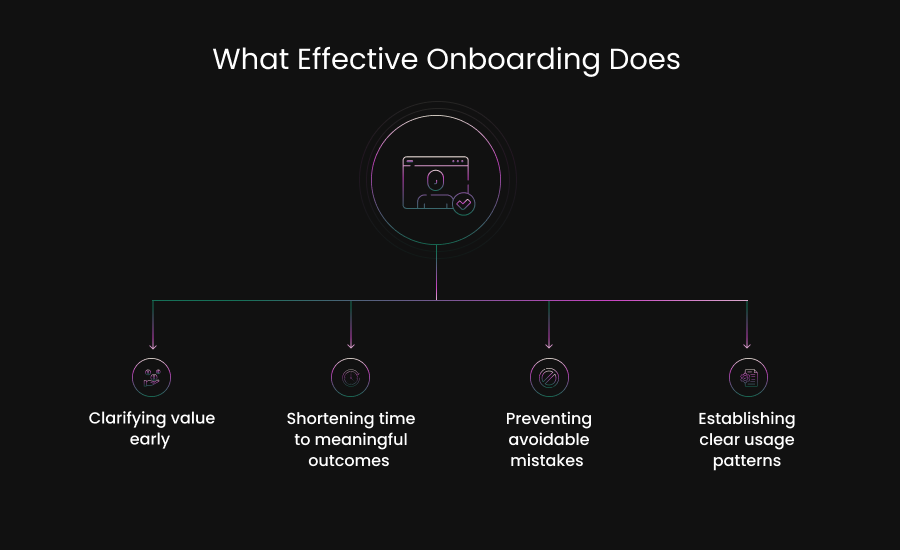
Better onboarding fixes user churn by addressing the root causes that lead users to disengage in the first place. Instead of reacting to churn after it happens, onboarding shapes how users understand, experience, and adopt the product from the very beginning.
When onboarding is designed around clarity, momentum, and confidence, it removes uncertainty early, shortens time to value, and creates a product experience that naturally supports long term usage.
Start With Outcomes, Not Instructions
Effective onboarding begins by defining success.
Users need to understand what problem the product solves and what outcome they should expect. When onboarding frames actions around results, relevance becomes clear quickly.
This alignment directly supports efforts to reduce user churn.
Design a Clear First Success
The most important onboarding moment is the first meaningful action that delivers visible value.
Whether it is completing setup, generating output, or finishing a workflow, this moment builds confidence. Confidence encourages exploration, which leads to adoption.
Products that reduce churn intentionally design onboarding around this milestone.
Introduce Complexity Gradually
Users do not need full product depth on day one.
Progressive onboarding introduces features as users gain familiarity. Early experiences remain simple, while advanced options appear later.
This approach reduces overwhelming and keeps users moving forward.
Provide Guidance Within the Workflow
Users rarely stop to read documentation.
High performing onboarding embeds guidance directly into the interface. Tooltips, prompts, and contextual explanations appear exactly when needed.
This prevents errors, reduces frustration, and lowers onboarding churn.
Reinforce Correct Behavior With Feedback
Users need reassurance.
Clear feedback after actions confirms success and explains what happens next. This reinforcement reduces anxiety and builds trust, especially in complex products.
Onboarding Is a Continuous Product System
Treating onboarding as a one time signup event is a common mistake. Many products invest heavily in welcome screens and initial tours, then remove guidance just as users begin to explore deeper functionality. This creates a gap where users are expected to figure things out on their own, increasing uncertainty and drop off.
Real onboarding evolves alongside the user. As familiarity grows, guidance should transition from basic orientation to more advanced workflows, best practices, and optimization opportunities. This helps users continue building confidence instead of plateauing after initial setup.
Continuous onboarding aligns the product experience with the full user journey. By supporting users at each stage of maturity, products reduce friction over time and create the conditions for long term engagement and sustainable churn reduction.
Why Traditional Churn Reduction Strategies Fall Short
Retention emails, discounts, and exit surveys respond to churn after disengagement has already occurred. By the time these tactics are deployed, users have already lost confidence or momentum, making re engagement difficult and often short lived.
These approaches are inherently reactive. They attempt to recover interest after the product experience has already failed to support the user effectively, which limits their long-term impact on retention.
Onboarding, on the other hand, is preventative. It addresses confusion, misalignment, and uncertainty early, before they turn into churn metrics. For teams serious about churn reduction strategies, onboarding must be treated as a core product capability rather than a fallback retention tool.
Key Takeaways
- User churn is not a late stage retention problem; it is an early product experience failure that begins during onboarding.
- Most churn happens because users never reach clarity, confidence, or meaningful value fast enough.
- Poor onboarding increases churn by assuming context, exposing features too early, and failing to signal progress.
- Better onboarding reduces churn by guiding users to early success, reducing friction, and reinforcing correct behavior.
- Treating onboarding as a continuous product system is one of the most effective long term churn reduction strategies.
Onboarding as a Strategic Advantage!
Very few SaaS teams directly connect onboarding decisions to churn outcomes. This gap creates an opportunity for platforms, which approach churn reduction through product experience rather than persuasion.
By aligning onboarding with user intent, behavioral signals, and activation milestones, products can intervene early and reduce churn through better usage.
If your product struggles to reduce user churn, the issue is rarely missing features or aggressive competition.
Users leave when they feel uncertain, unsupported, or unsure of progress. Better onboarding replaces that uncertainty with direction, confidence, and momentum.
Churn is not a retention failure. It is a design signal. To fix onboarding, and churn contact us today!
Frequently Asked Questions
Why do products fail to reduce user churn even after improving features?
Products often fail to reduce user churn because users never experience the value of those features clearly or early enough. Feature improvements do not matter if onboarding does not guide users toward understanding how and why those features help them achieve outcomes.
How does onboarding directly impact user churn?
Onboarding shapes first impressions, confidence, and usage habits. Poor onboarding creates confusion and hesitation, which leads to early disengagement. Strong onboarding reduces churn by shortening time to value and helping users feel capable and supported from the start.
What are the most common onboarding related user churn causes?
Common onboarding related churn causes include assuming prior user knowledge, showing features before value is established, using a one size fits all onboarding flow, ignoring small friction points, and failing to show progress or next steps.
Why is onboarding more effective than retention campaigns for churn reduction?
Retention campaigns are reactive and attempt to recover users after disengagement has already occurred. Onboarding is preventative. It addresses confusion and misalignment early, reducing the likelihood that users disengage in the first place.


.svg)

